
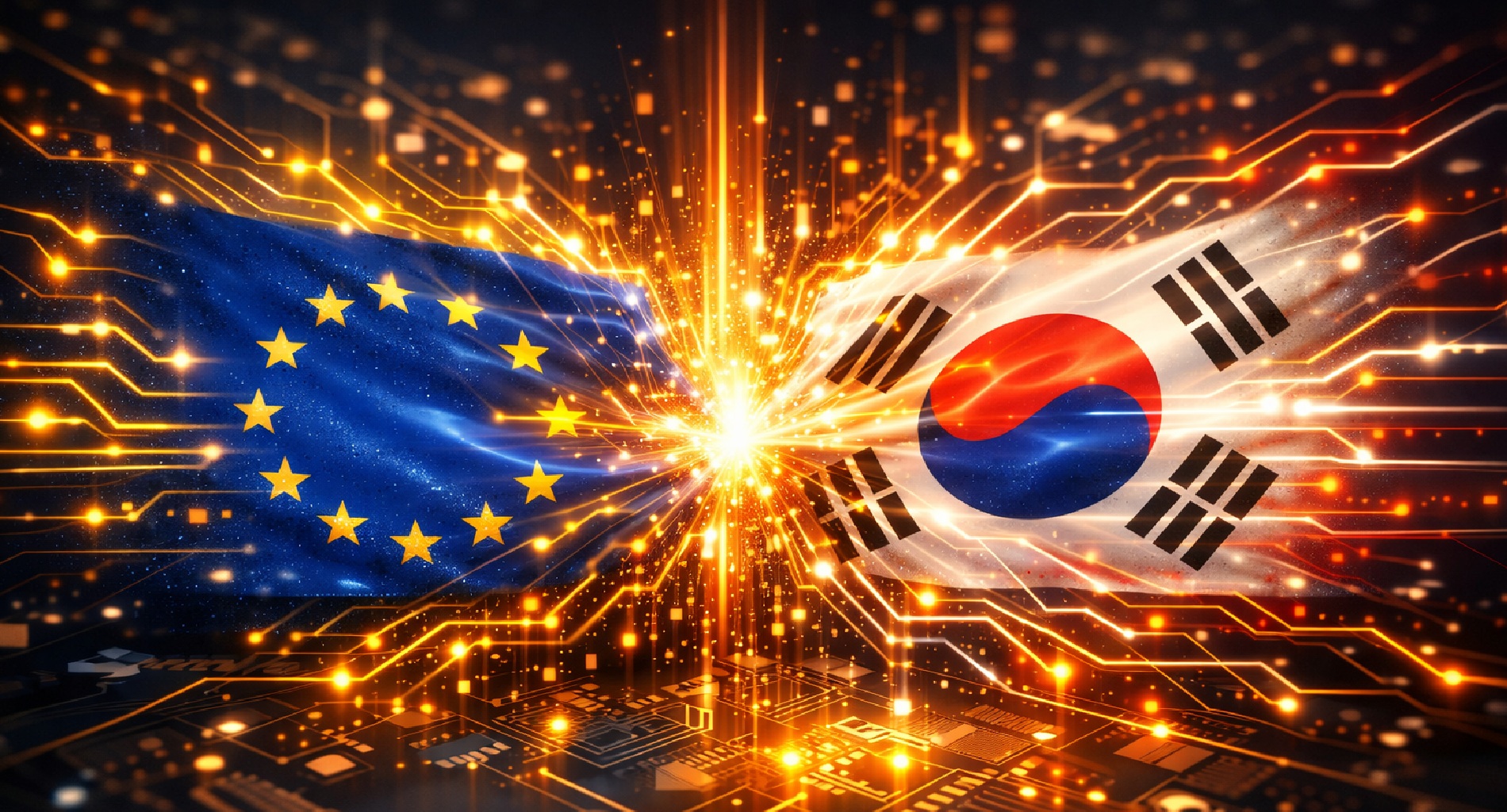
AI is consuming electricity at a staggering rate, and scientists in Europe and South Korea believe they’ve found a way to curb the power drain. Their new research uses light-based chips to process data far more efficiently than today’s electronics, offering a potential lifeline as AI’s energy appetite spirals.
Our team helped bring this story to global audiences, securing major coverage in Computer Weekly, Science|Business, IT Brief Asia, and New Electronics, reaching around 80,000 readers across the technology, policy and engineering sectors.
The project, funded by the EU and known as HAETAE, is developing photonic chips that use light rather than electricity to process data. This could make future AI systems dramatically more efficient at a time when energy use is a growing challenge.
Computer Weekly helped place the story within the wider debate on AI and digital infrastructure, while Science|Business brought it to policymakers and innovation leaders. IT Brief Asia and New Electronics reinforced the message across key trade and regional media.
Sam Young, head of content and media at Matter PR, said:
“Light technologies continue to deliver powerful science stories. The HAETAE team is developing a serious solution to AI’s growing energy problem, and many media outlets viewed the collaboration between Europe and South Korea as a novel and compelling angle. This international partnership has helped the coverage stand out, giving journalists a fresh way to frame the project as an example of cross-border innovation that brings together shared expertise.”
The campaign positioned photonics as a credible, forward-looking solution to one of AI’s most pressing infrastructure challenges.
Matter PR is a global communications agency that specialises in science, technology, and engineering. Contact us if you would like to discuss a project or campaign.
Communicating Europe’s Quantum Story
Over the past three years, Matter PR has led an international media campaign to position Europe as a global leader in quantum technologies and strengthen engagement with industry, policymakers, and the media. We delivered 17 major campaigns, generating 257 articles in media outlets worldwide, reaching an estimated 40 million readers. Our work focused on advancements [...]
A Look at Our Quantum Technology Campaigns
Over the past three years, we shaped Europe’s quantum story through a series of campaigns that connected complex science to real-world relevance, brought researchers and policymakers into the same conversation, and helped the public understand why quantum matters. Working with the Quantum Flagship, we helped to turn major scientific and policy milestones into stories that [...]
Media campaign puts €5M Photonics Talent Pipeline in global spotlight
We delivered a media campaign that placed Europe’s new €5M photonics education and training network firmly in the global conversation about technology, skills and industrial competitiveness. When the European Commission invested €5 million into a new pan-European education and training network for photonics, the challenge was to ensure that this investment in skills was heard [...]